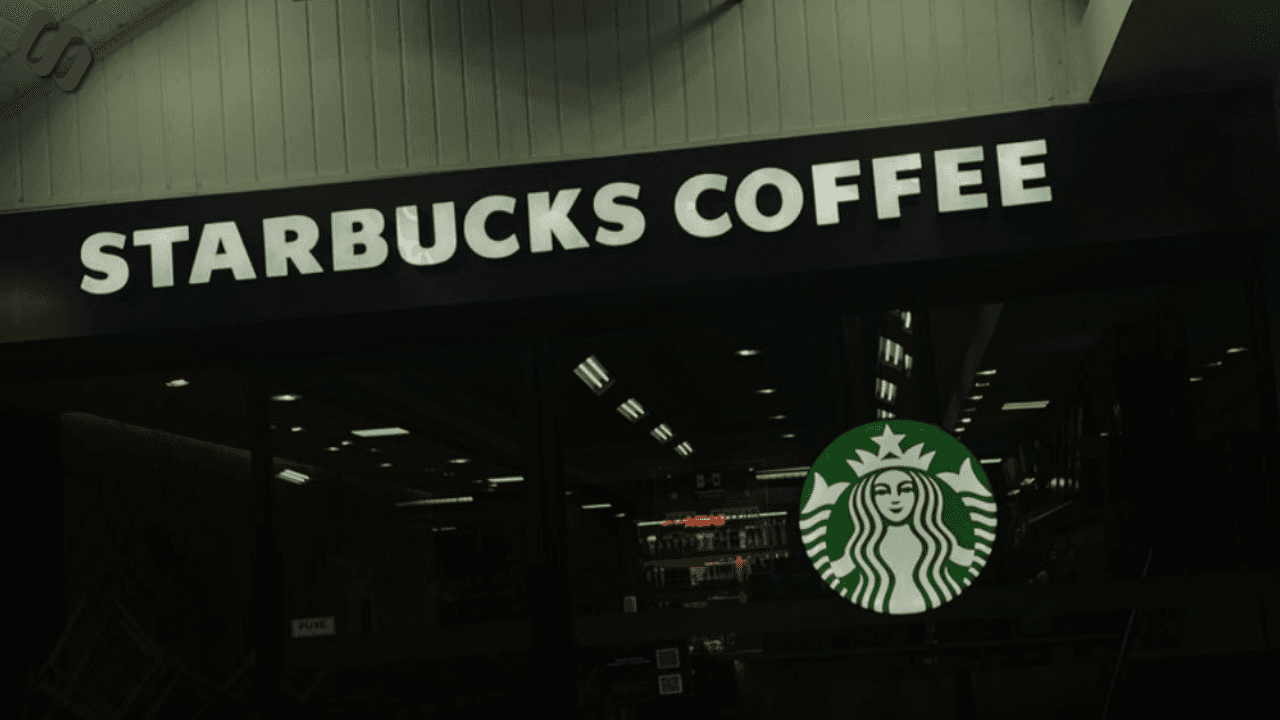
Starbucks Misspells Your Name on Purpose
5 min read
In 2015, a comedian named Paul Gale uploaded a video to YouTube.
The video made a simple claim. Starbucks baristas don’t accidentally misspell your name. They do it on purpose. It’s a marketing strategy.
The video went viral. Millions of views. Thousands of shares. Think pieces everywhere.
The theory was elegant. You order a latte. The barista writes “Micheal” instead of “Michael” or “Geoff” instead of “Jeff” or, in one famous case, “Cark” instead of “Marc.” You find this hilarious. You take a photo. You post it to Instagram with a caption like “Starbucks really did me dirty today.” Your friends see the green logo. They think about coffee. They want coffee. They go to Starbucks.
Free advertising. Millions of impressions. Zero dollars spent.
The hashtag #StarbucksNameFail has over 27,000 posts on Instagram alone. Each post reaches hundreds of followers. Do the math and you’re looking at millions of people seeing that green mermaid logo, laughing, engaging, sharing.
It’s genius. If it’s true.
What Starbucks Says
Starbucks denies it.
“We have never asked or directed any of our partners to misspell names of our customers for any reason,” a spokesperson told BuzzFeed News in 2016. They repeated this to Thrillist in 2023.
Writing names on cups, they explain, is “a fun tradition born out of the relationship and interaction between our employees and customers.”
The misspellings are accidents. Starbucks stores are loud. Grinders whir. Steam wands hiss. Music plays. Customers mumble. Baristas work fast. Mishearing “JP” as “Jade” isn’t a conspiracy. It’s physics.
Case closed?
Not quite.
What the Baristas Say
In 2014, an assistant manager at Starbucks told Cosmopolitan something interesting.
“I don’t know if everyone does it, but when I asked my manager if she does, she admitted most Starbucks employees use it as a marketing tool.”
The assistant manager continued: “Most people aren’t going to post a photo to social media of a cup with their name spelled right.”
This is the uncomfortable middle ground. Corporate headquarters may have never issued a directive. But individual employees might have figured out the game on their own.
Think about it from a barista’s perspective. You work eight hours a day writing names on cups. You notice that when you spell “Katherine” as “Cathrin,” she laughs and shows her friends. When you get it right, nothing happens.
You don’t need a memo from Seattle to understand cause and effect.
The Psychology of Your Own Name
There’s a phenomenon in psychology called the cocktail party effect.
You’re at a crowded party. Dozens of conversations happening simultaneously. You’re focused entirely on the person in front of you. Then, from across the room, someone says your name.
Instantly, your attention snaps to them.
This was first studied by Colin Cherry in 1953. He found that humans have a remarkable ability to filter out background noise, but certain stimuli break through that filter automatically. Your own name is the most powerful of these stimuli.
About one third of people will notice their name being spoken in a conversation they’re actively ignoring. The sound of your own name activates a part of your brain called the reticular activating system, which is responsible for directing attention. It’s wired at a deep level. Evolutionary, probably. Hearing your name in the wild might have meant the difference between life and death.
Starbucks understands this. Whether the misspellings are intentional or not, writing names on cups isn’t about efficiency. It’s about attention.
When a barista calls out “Grande latte for Jessica,” something happens in Jessica’s brain that doesn’t happen when they call out “Grande latte, order up.”
The Misspelling Creates the Story
Here’s what most analyses miss.
A correctly spelled name creates a transaction. An incorrectly spelled name creates a story.
Nobody posts a photo of their Starbucks cup with their name spelled correctly. Why would they? There’s nothing to say. “Starbucks spelled my name right” is not content. It’s not funny. It’s not interesting. It’s not shareable.
But “Starbucks turned Marc into Cark” is all of those things.
The misspelling transforms a mundane purchase into an experience worth documenting. It gives you something to talk about. It creates a micro-narrative: you, the victim of an absurd error, sharing your amusing suffering with friends.
And in the background of that narrative, always visible, is the Starbucks logo.
This is the brilliance, whether intentional or emergent. The company has created a system where mistakes generate more value than perfection.
The Genius of Plausible Deniability
Notice how perfectly Starbucks has positioned themselves.
If the misspellings are intentional, it’s genius marketing. Millions of dollars worth of free exposure.
If the misspellings are accidental, Starbucks is blameless. Customers can’t get mad about a genuine mistake made in a loud, busy store.
Either way, Starbucks wins.
This is what makes the theory so compelling and so difficult to prove. The optimal strategy for Starbucks is to never confirm it, regardless of whether it’s true. Confirmation would turn a delightful quirk into a cynical manipulation. The magic only works if it might be an accident.
Compare this to a company that explicitly launched a user-generated content campaign. “Post pictures of our product and tag us!” That feels like marketing. You’re being asked to work for the brand.
But sharing a photo of your hilariously misspelled name? That feels like you’re in on the joke. You’re not doing Starbucks’ bidding. You’re sharing something funny that happened to you. The fact that it also promotes Starbucks is incidental.
Or is it?
The Real Innovation
Forget whether it’s intentional.
The interesting question is: why does it work so well?
Starbucks stumbled onto something powerful, either by design or by accident. They discovered that imperfection can be more valuable than perfection.
A flawless experience is forgettable. A flawed experience creates a memory.
This runs counter to everything companies are taught about customer experience. Reduce friction. Eliminate errors. Make everything smooth and seamless.
But smoothness doesn’t create stories. Stories require conflict. Something has to go wrong. The hero has to face an obstacle.
When Starbucks misspells your name, you become the hero of a tiny story. You faced an obstacle (the wrong name). You overcame it (you got your coffee anyway). You have a tale to tell.
The misspelling is the obstacle that makes the story worth telling.
What Businesses Get Wrong
Most companies are terrified of mistakes.
They build elaborate systems to prevent errors. They apologize profusely when things go wrong. They treat every imperfection as a failure to be eliminated.
Sometimes this is appropriate. You don’t want your bank misspelling your name on legal documents. You don’t want your surgeon making “quirky errors” during your operation.
But for low-stakes interactions? Imperfection might be an asset.
The craft cocktail bar that slightly over-pours your whiskey. The local bookshop that hand-writes your receipt with a little doodle. The coffee shop that misspells your name.
These “mistakes” create personality. They make the experience feel human rather than mechanical. They give customers something to notice, react to, and share.
The question isn’t how to eliminate all errors. It’s which errors create value and which destroy it.
The Verdict
Does Starbucks misspell names on purpose?
Probably not as an official corporate policy. The logistical challenges would be immense. How would you train baristas to misspell consistently but not obviously? How would you prevent them from telling friends? How would you handle the PR disaster if a memo leaked?
But do some individual baristas misspell names intentionally, knowing it generates buzz? Almost certainly.
And does Starbucks benefit enormously from the misspellings, regardless of intent? Absolutely.
The genius isn’t necessarily in planning this. The genius might be in recognizing it, allowing it to continue, and never confirming or denying it.
Some questions are more valuable unanswered.
What We Do at Soar
This is the kind of marketing we study obsessively.
Not the obvious campaigns. Not the big ad buys. The subtle mechanisms that turn ordinary interactions into extraordinary brand moments.
Starbucks may or may not misspell your name on purpose. But they definitely understand that personal touches, even imperfect ones, create connection. That user-generated content is more powerful than paid advertising. That the best marketing doesn’t feel like marketing at all.
We help brands find their version of this. The authentic quirk that turns customers into storytellers. The “mistake” that generates more value than perfection ever could.
If you want to explore what that looks like for your brand, book a call with our team.
Want small touches that build big loyalty? Partner with Soar Agency to bring your vision to life.